Where the Goats Are
Game Analysis
An Introduction
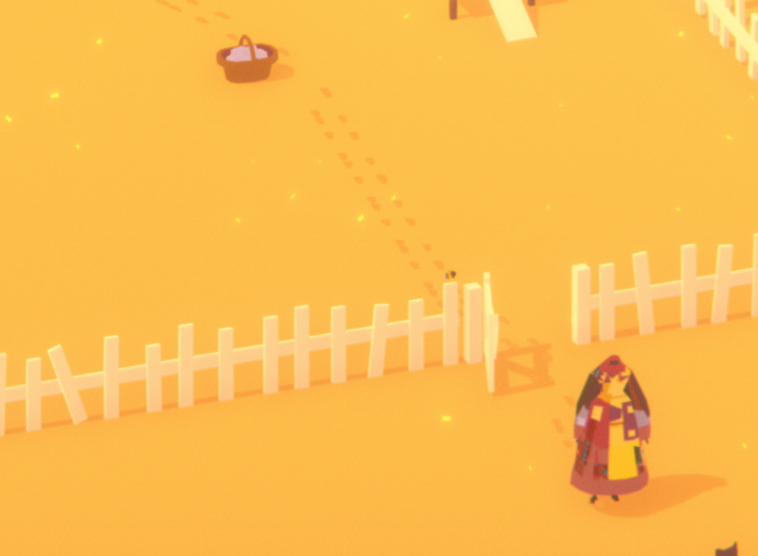
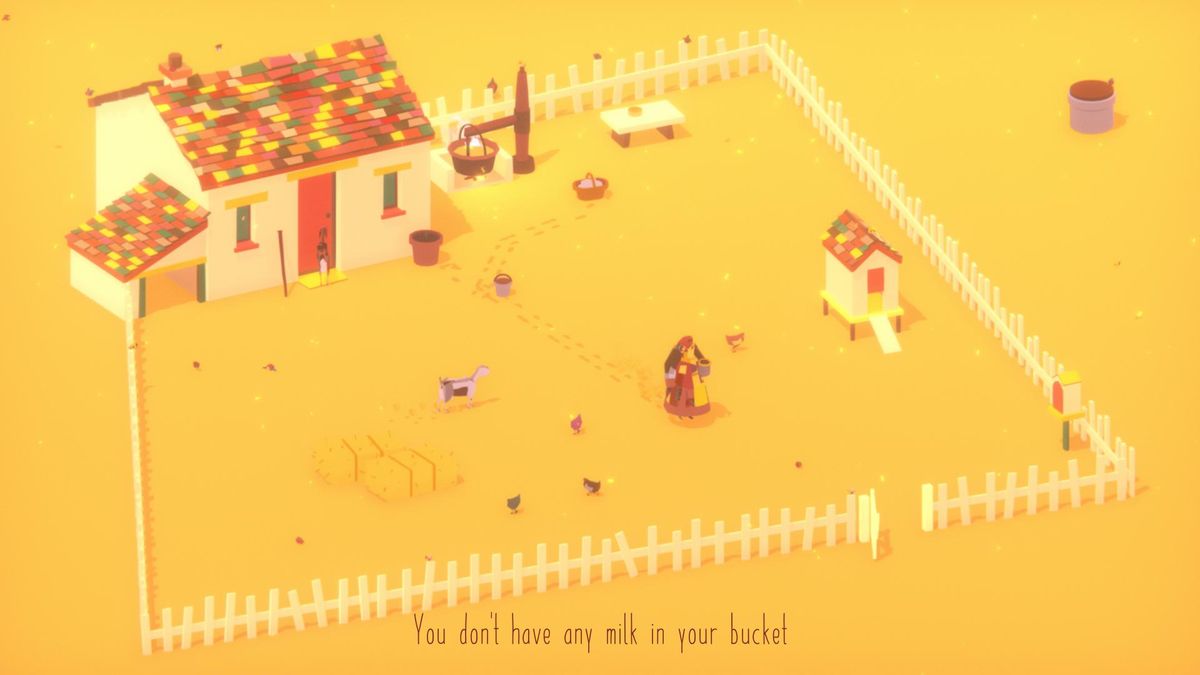
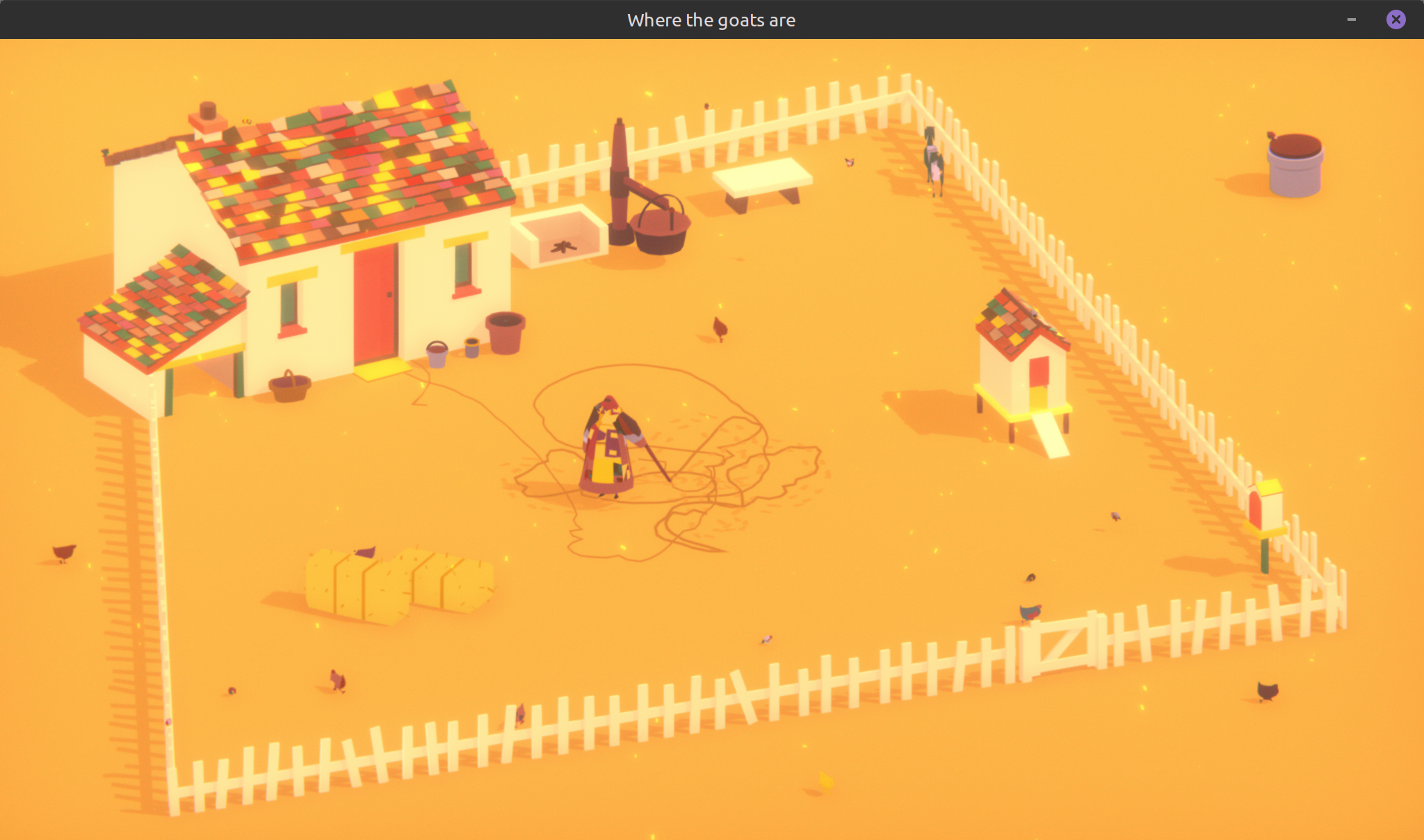
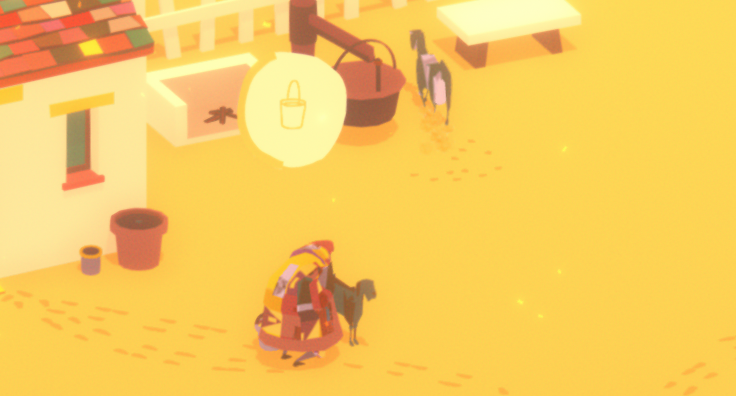
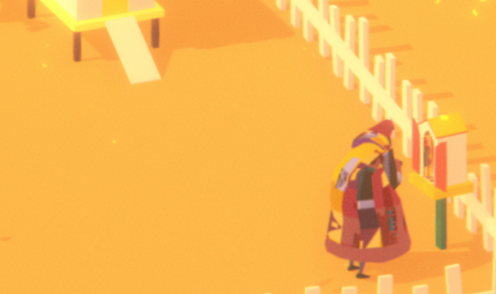
Where the Goats Are features simple and pleasing graphics. Its low-poly design compliments a modest environment in which you, Tikvah, live your day to day: wake up, watch the sunrise, milk your goats, listen to birds (whatever you want, really). This game is built to inhabit. There is not much more than that. Every now and then, a mailman waits at your fence with letters from family: this is where the game’s narrative takes place. The only real challenge you face is an internal one, and the only place you get stuck is, if you’re like me, in front of your goats, bumbling about in an attempt to coerce the goat-milking icon out of hiding.
Characters
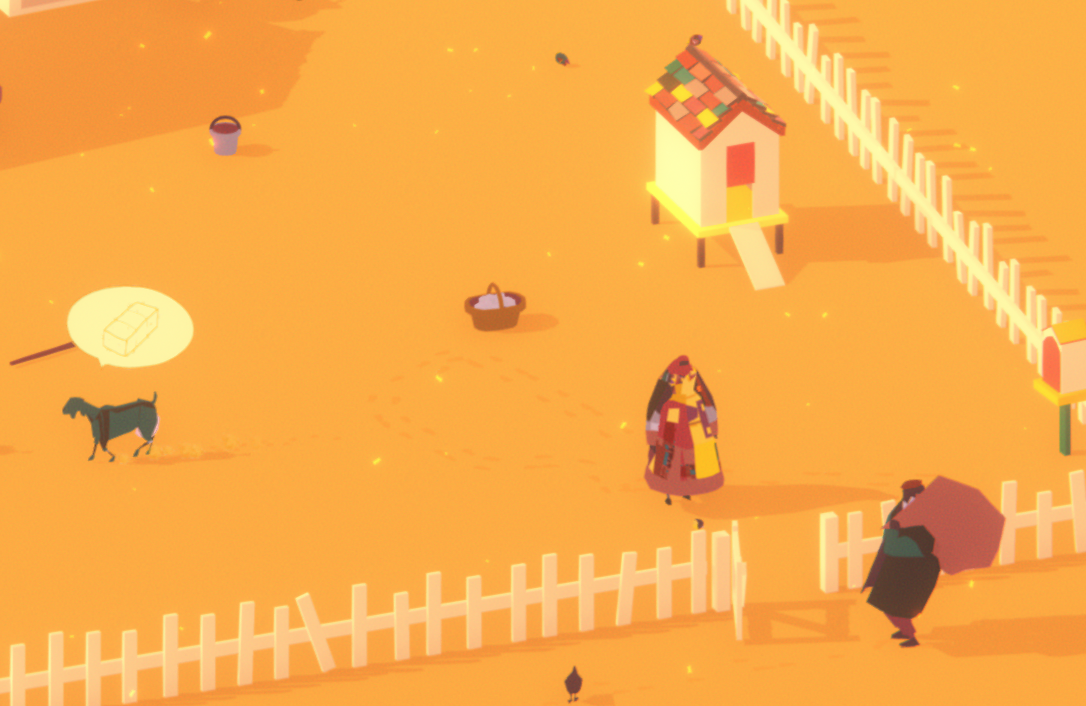
As mentioned, the only character you control is Tikvah. However, you receive letters throughout the game from a lovely mailman (who also provides hay and goats for a price). These letters help characterize your family (mostly brothers) and explain what’s happening in the world. Those who write to you are Gavrillo, your great grand niece, who talks about what it’s like moving to the city. Then your brother Semba who expresses that they miss you and how grating the city life is in comparison to the nature and pollution-free farm. Then Talm, a child of your brother’s, talks about their day to day; it’s here that we get a bit of knowledge on Tarr as well as his fights with the brother’s. The final brother’s, Rorik and Boris, write to you later, detailing the progressive degradation of society with Tarr warning her well. All the while, you tend your goats.
Items
There is a myriad of items to muck about with: a watering can, a pale for milking, a basket for egg collection, a cheese station, and–for the daredevils out there–a stick with which you can draw lines in the dirt. These items are intended to help the player establish their specific routine. Manage the farm, don’t manage the farm, the items are there for you regardless.
Challenges
The challenges of this game are, as mentioned, far and few between. It is more so an interactive narrative that you get to play around in. However, if you are one to really “get into it,” then you may find yourself encountering personal challenges such as the short day cycles making it more difficult to water your plant on time, the goats’ milking cooldown, and the occasional bug that doesn’t let you click what you want to click.
Symbolism
The game’s narrative mentions a decaying world, the country-and-city contrast possibly indicative of environmental issues in the real world. It could also be taking the societal perspective by using these character’s as symbols of their respective habitats--rural and urban society--conveying that this in-game encroachment of some sort of all-numbing ennui might be more real than we realize.
Kumu
This is my little Kumu analysis! The line connections are based off Tags, color by Element, and Shape by Role. Feel free to interact with it a bit!
Conclusion
In conclusion, I enjoyed this narrative-focused game for what it was, and after hearing that there's a second one, I might go ahead and check it out...